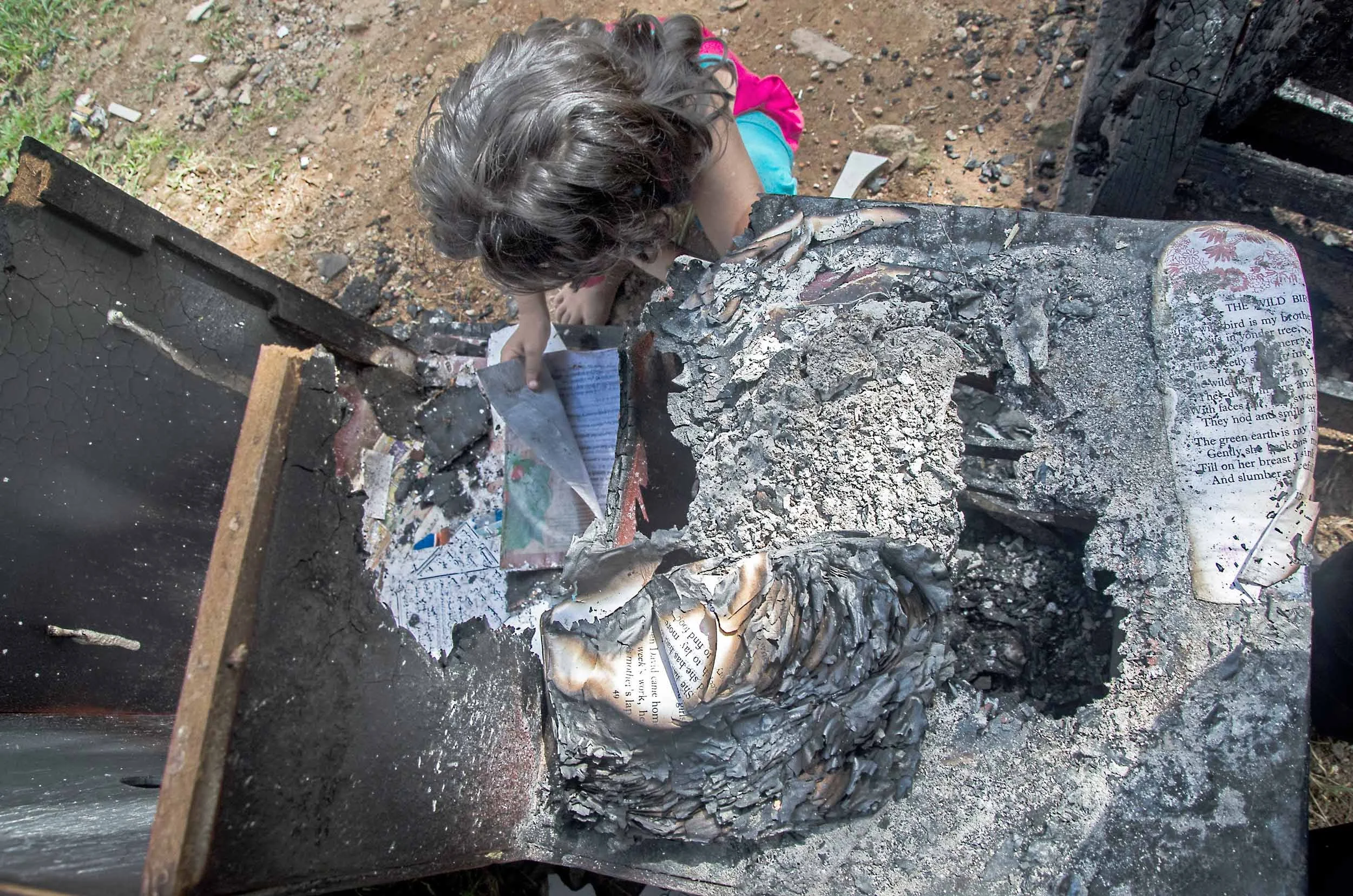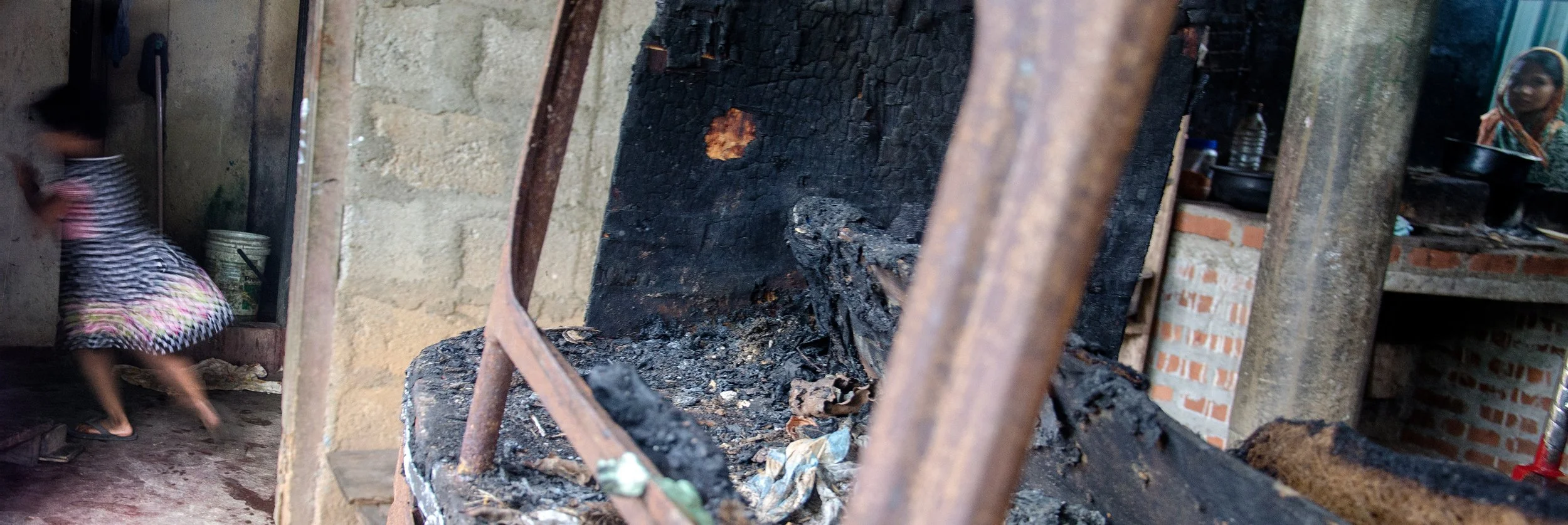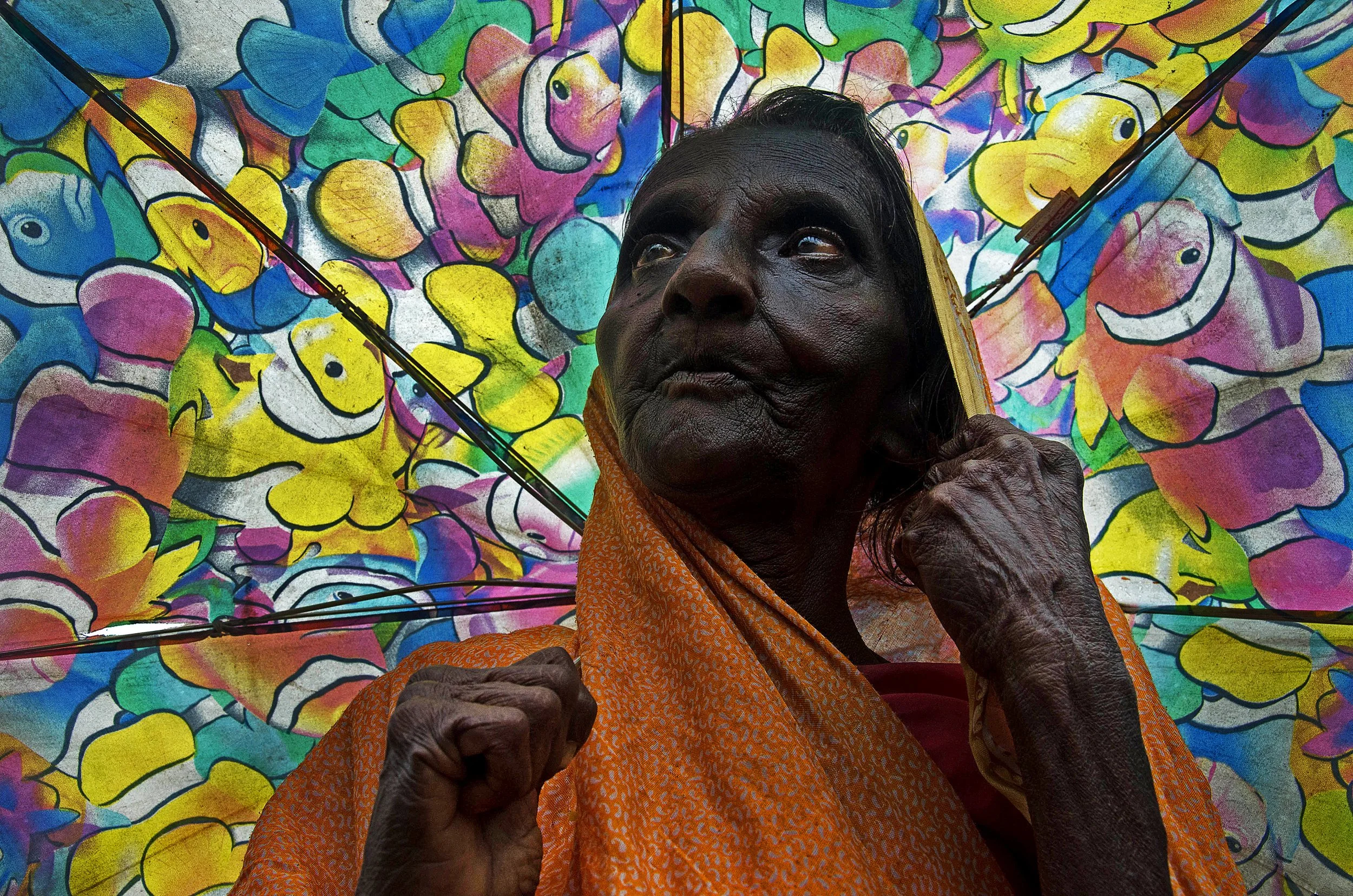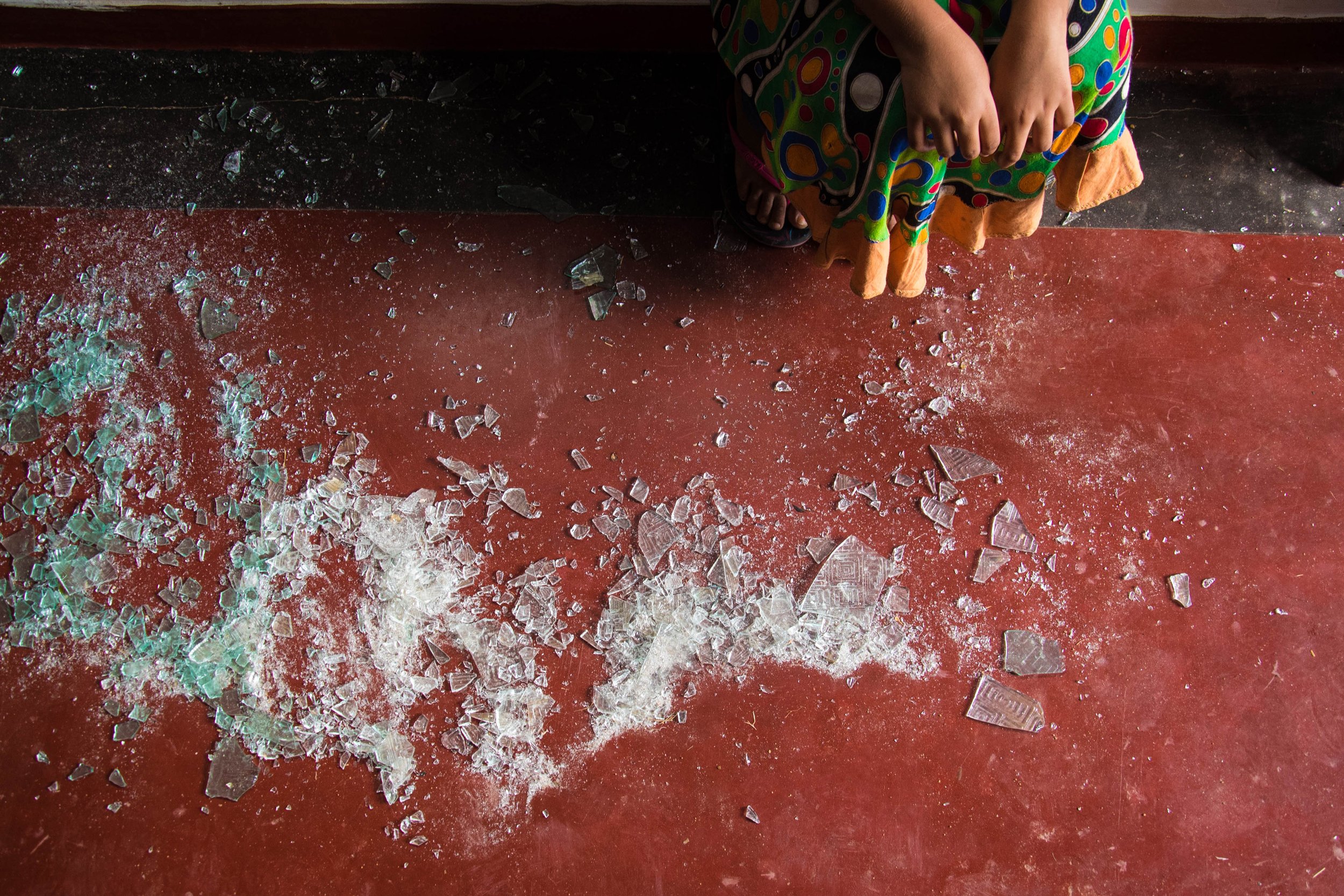
The damage was not only to buildings. It entered places of prayer, trade, memory, and belonging.
In recent years, Muslim communities in Sri Lanka have faced repeated waves of targeted violence. Homes, businesses, mosques, vehicles, and schools were attacked in outbreaks that left families displaced and neighbourhoods marked by fear.
This story looks at the aftermath rather than the spectacle of violence. A prayer cap lies among burnt remains. A stairwell carries smoke on its walls. Inside a mosque, the carpet is lifted and reset, as if the room itself is trying to breathe again.
These photographs hold the quiet labour that follows communal violence: cleaning, returning, repairing, and praying in places where safety had been broken.
Anti-Muslim violence in Sri Lanka has been a recurring issue, with several significant outbreaks in recent years.
The Aluthgama riots in June 2014 were a major incident of anti-Muslim violence. On June 15, violent mobs attacked Muslim businesses, homes, and places of worship in the coastal town of Aluthgama and nearby Beruwala. The violence, which escalated after a Buddhist rally turned confrontational, led to widespread destruction. The attacks resulted in damage to 88 Muslim-owned businesses, 24 homes, 3 mosques, 1 Muslim school, and 1 hospital. Additionally, 11 people were injured.
Make it stand out.
-
![]()
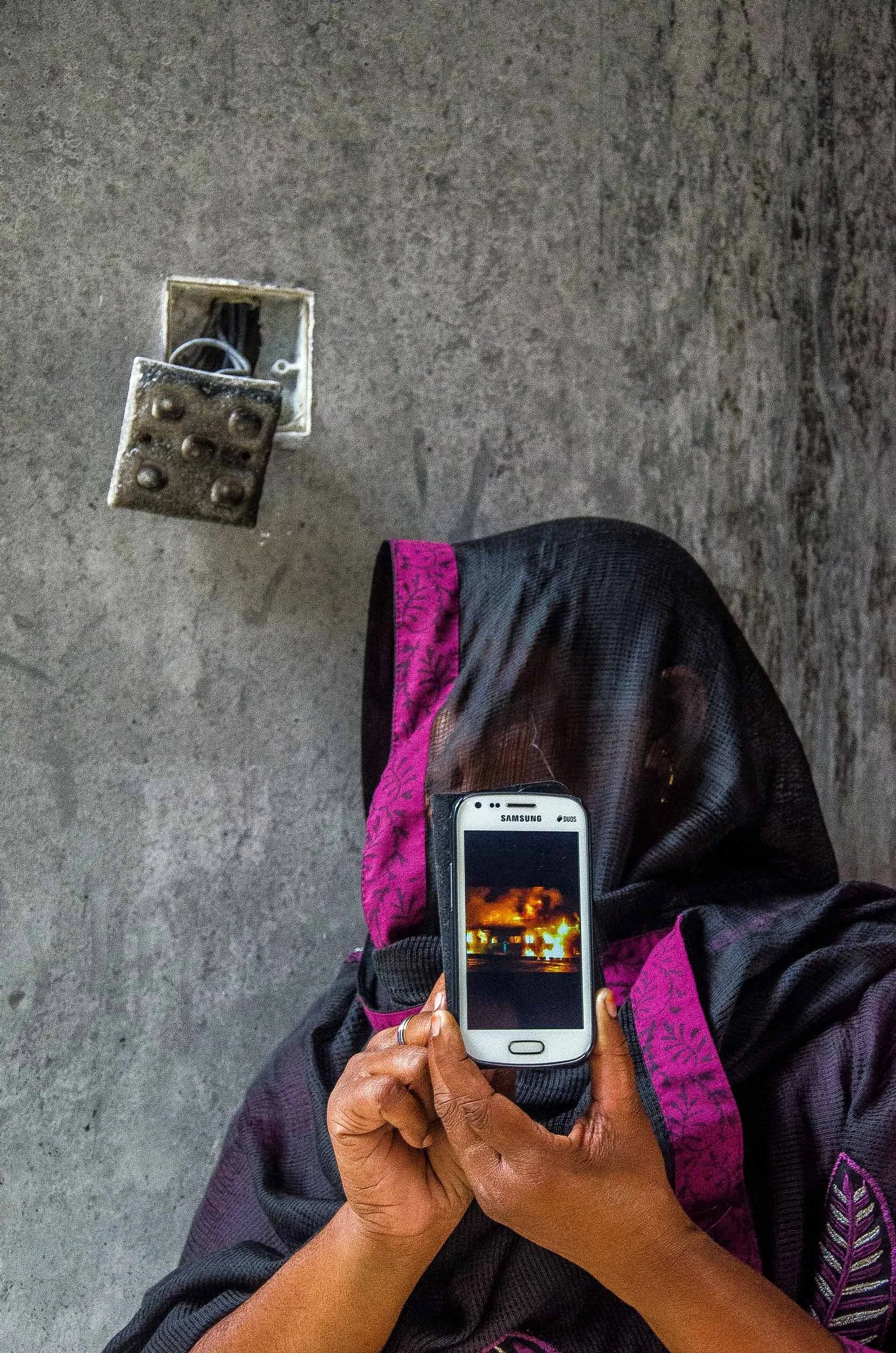
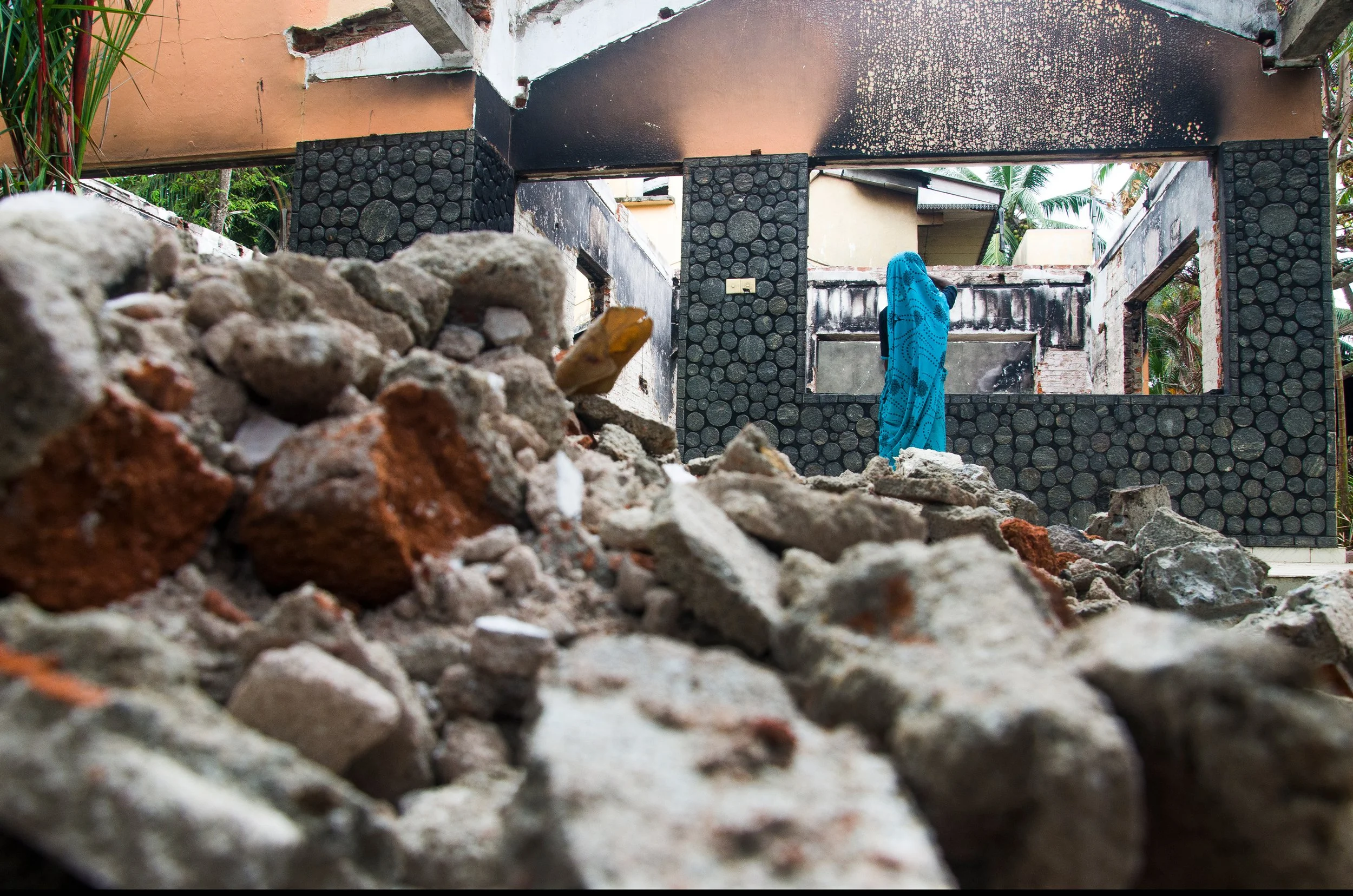
A Woman Documents the Burning of Her Home
Anti-Muslim Violence: 2014 - Aluthgama
The anti-Muslim attacks in Aluthgama, Sri Lanka, occurred on June 15, 2014. These attacks involved a series of violent incidents targeting Muslim businesses, homes, and places of worship in the coastal town of Aluthgama and nearby Beruwala. Many people were injured in the violence.
A Muslim woman shows the phone recording how her house was set on fire during the clashes that took place in the Aluthgama riots.
-
![]()
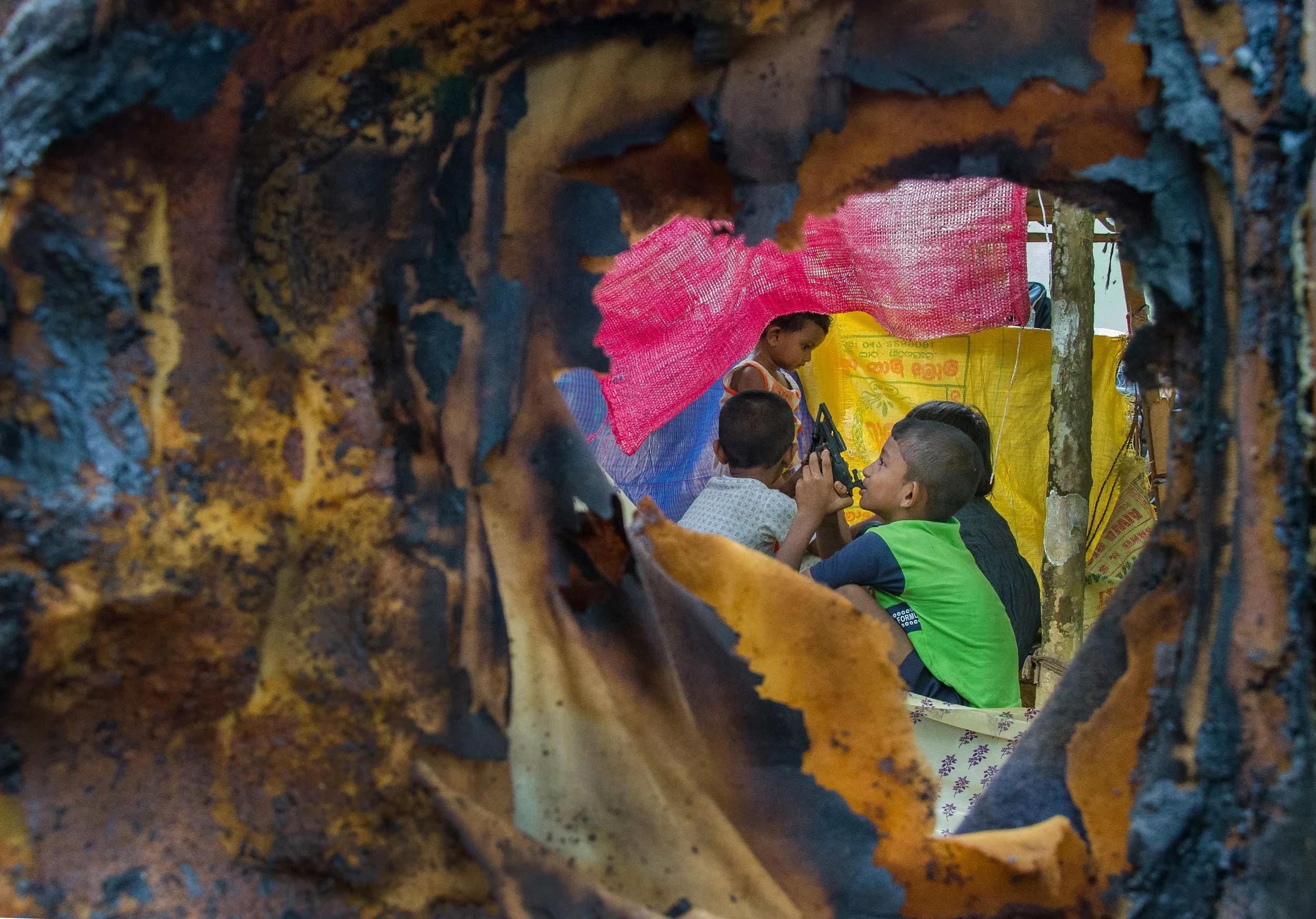
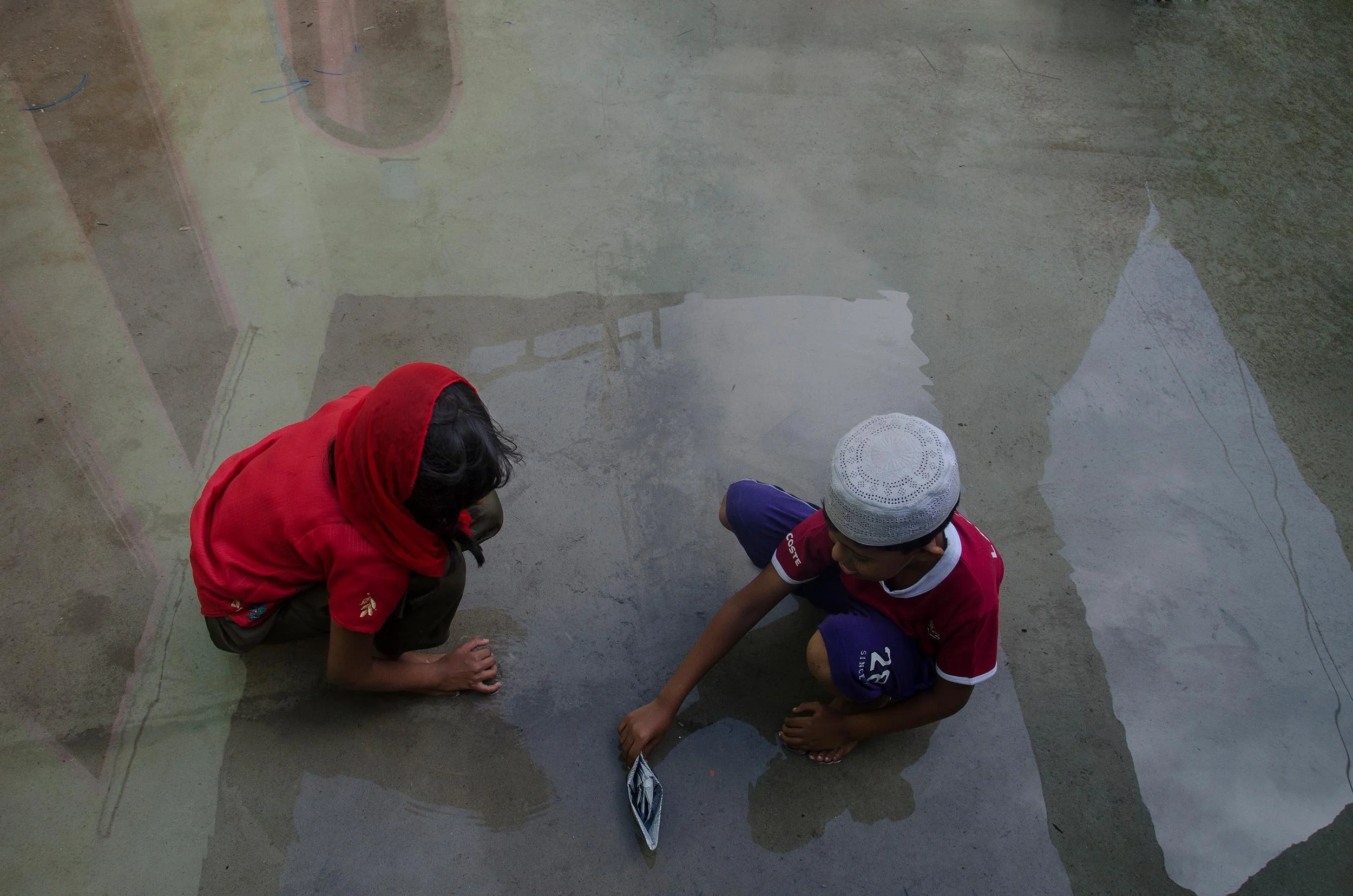
Dreams in Paper Boats, Aluthgama
Anti-Muslim Violence: 2014 - Aluthgama
After the attack on Muslim homes in Seenawatta, Dharga Town, Aluthgama, children play with paper boats in rainwater outside their home.
Children launch paper boats
Into puddles on rain-soaked streets,
Floating dreams away from home.
"We're going to Australia," they say,
Imagining a village afar,
Reborn like the old one,
In lands untouched by ash.
Paper boats drift slowly,
Rain washes Aluthgama
Dreams sail far from home
-
![]()
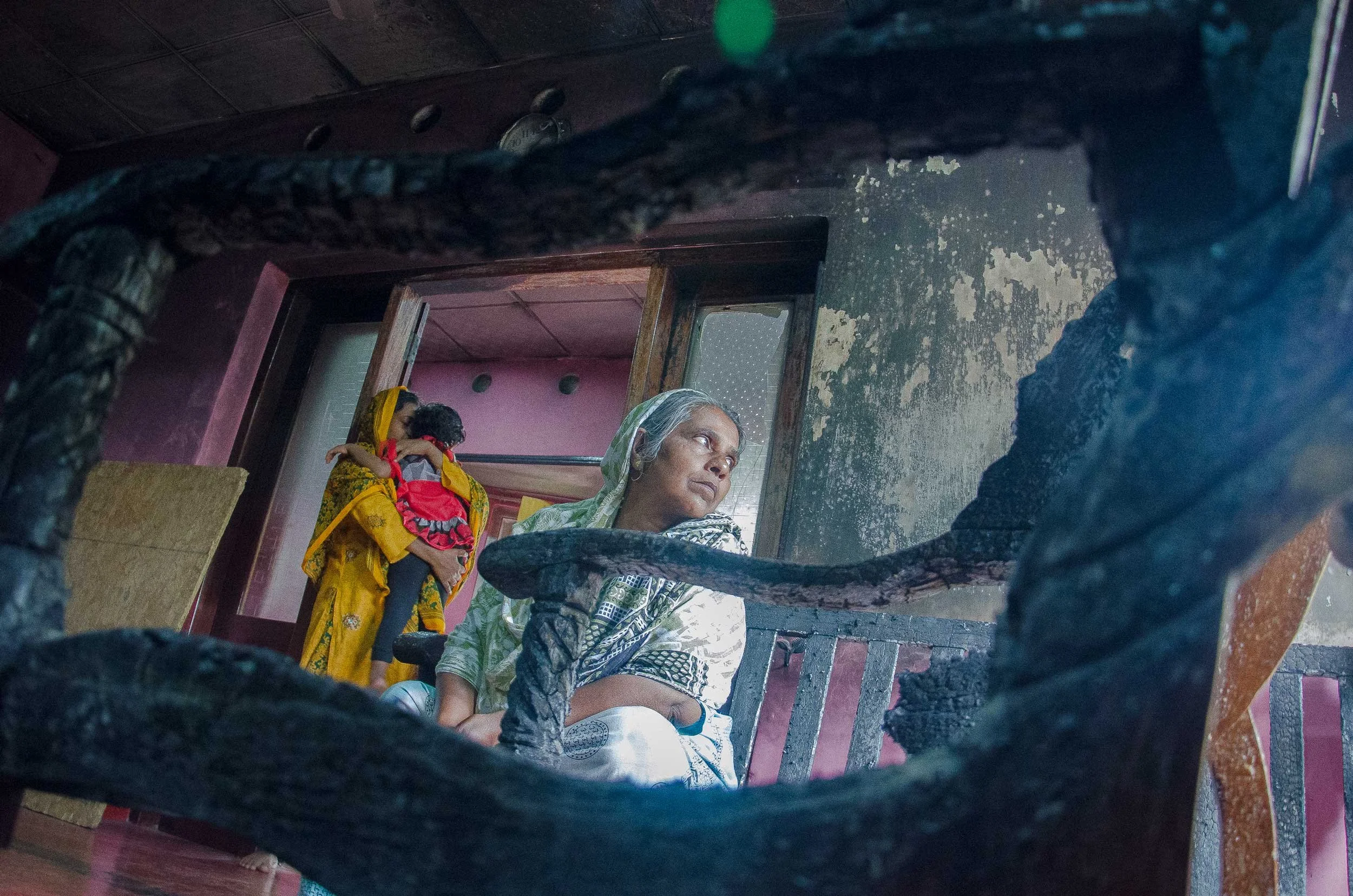
Burnt Belongings and Displacement
Anti-Muslim Violence: 2014 – Aluthgama
Thunduwu, a small Muslim village near the town of Beruwala, was among the areas affected during the attacks. Following the violence, this photograph shows burnt household belongings and images of the affected residents, capturing the aftermath of destruction and displacement.
-
![]()
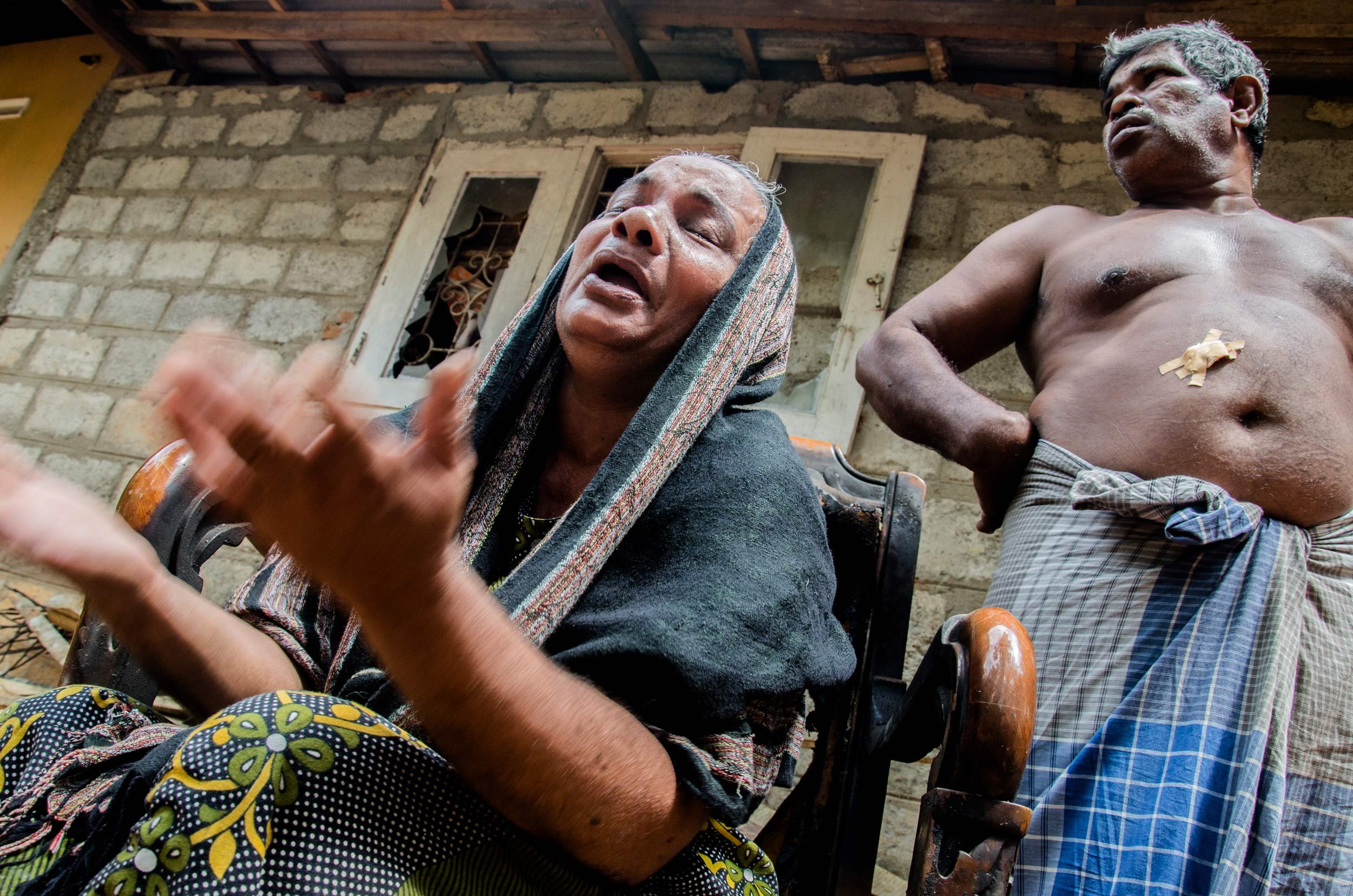
Fear and Grief in the Aftermath of Violence
Anti-Muslim Violence: 2014 – Aluthgama
The riots left many in emotional distress, with the aftermath marked by displacement, damaged property, and an ongoing sense of fear among affected residents.
-
![]()
New List Item
Description goes here -
![]()
New List Item
Description goes here -
![]()
New List Item
Description goes here -
![]()
New List Item
Description goes here -
![]()
New List Item
Description goes here -
![]()
New List Item
Description goes here