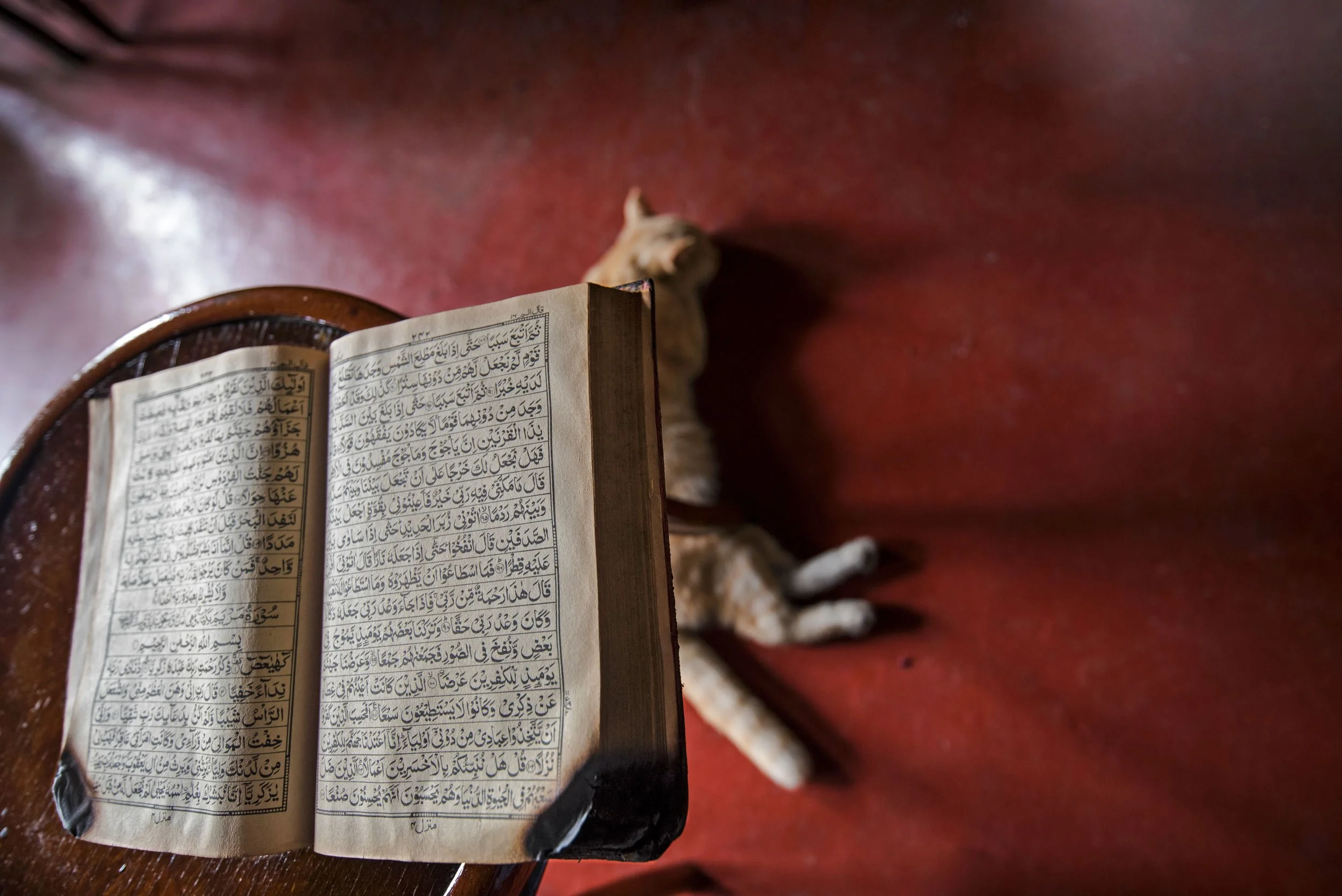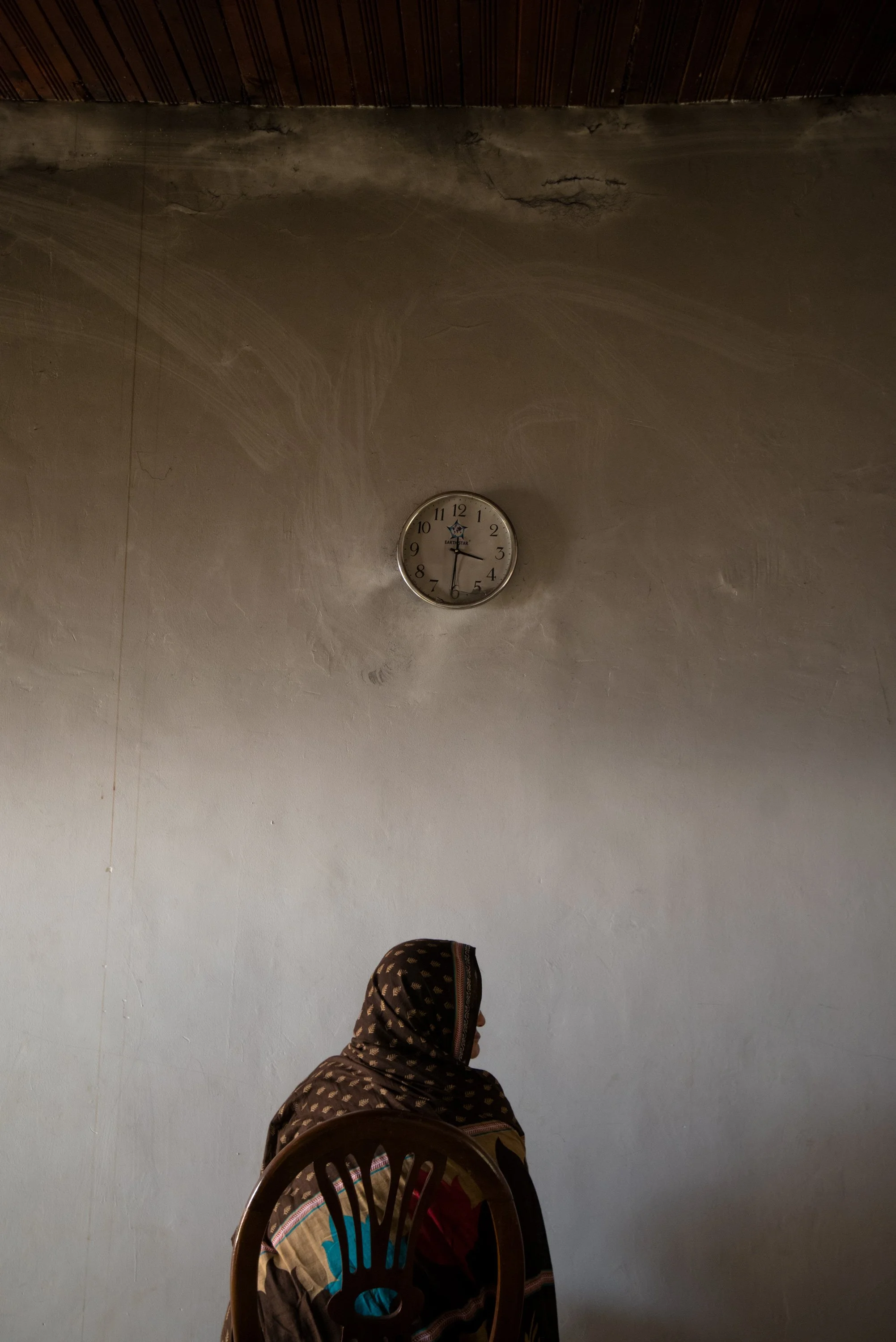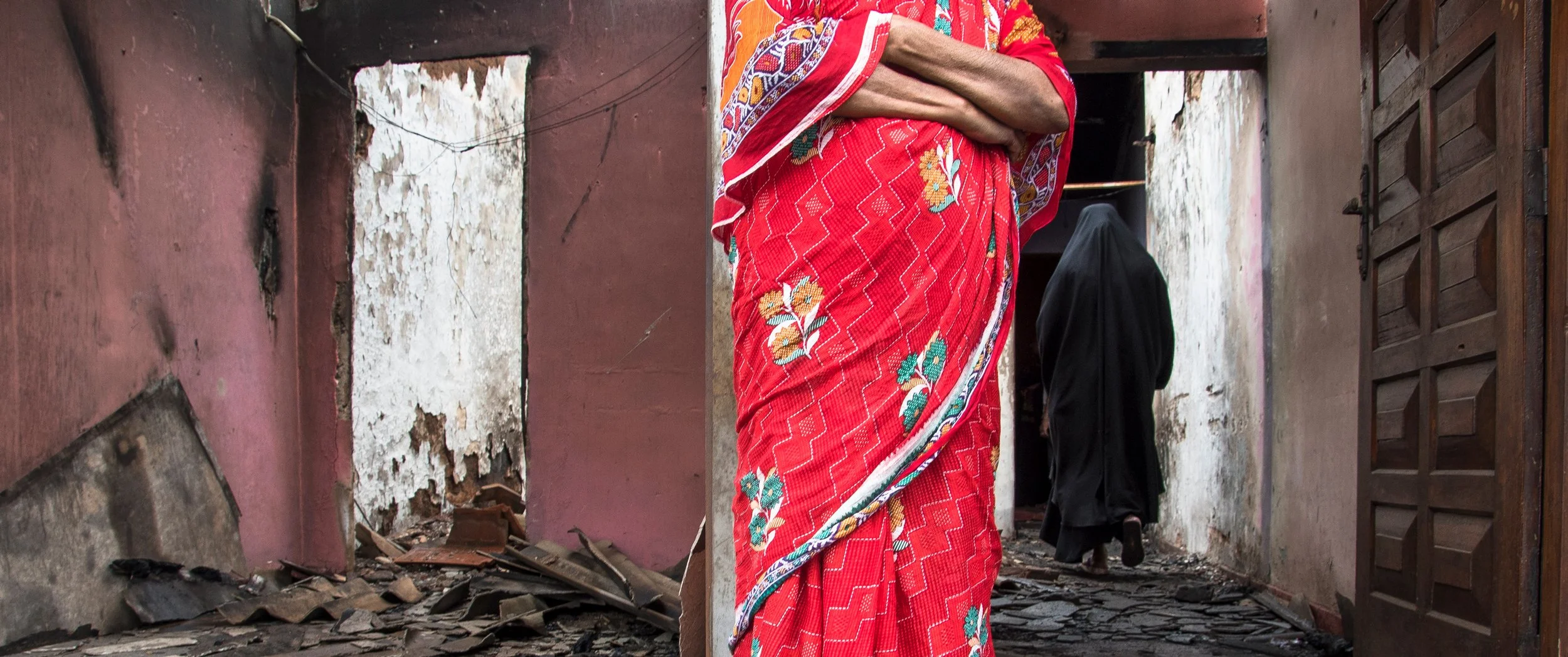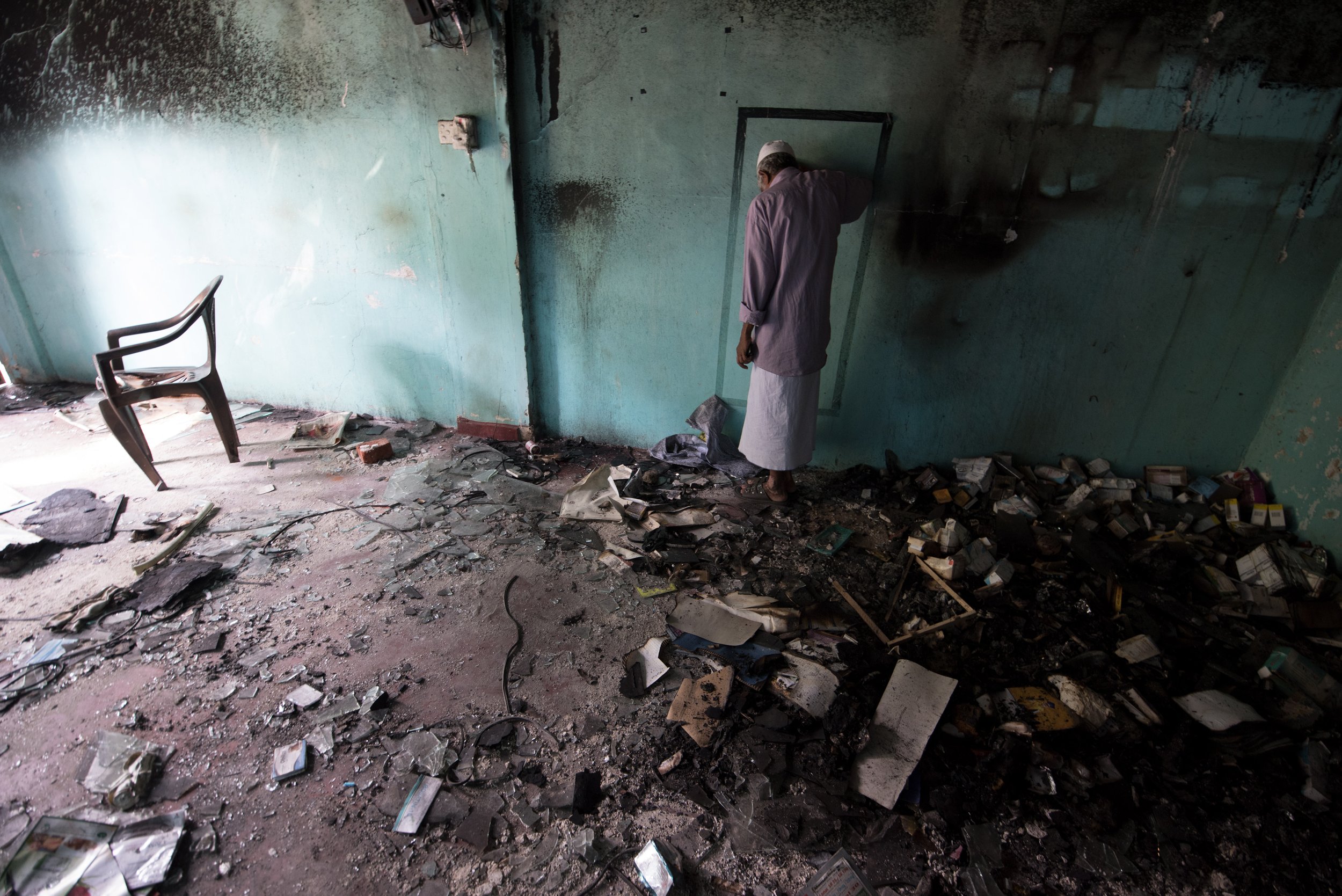
The damage was not only to buildings. It entered places of prayer, trade, memory, and belonging.
In recent years, Muslim communities in Sri Lanka have faced repeated waves of targeted violence. Homes, businesses, mosques, vehicles, and schools were attacked in outbreaks that left families displaced and neighbourhoods marked by fear.
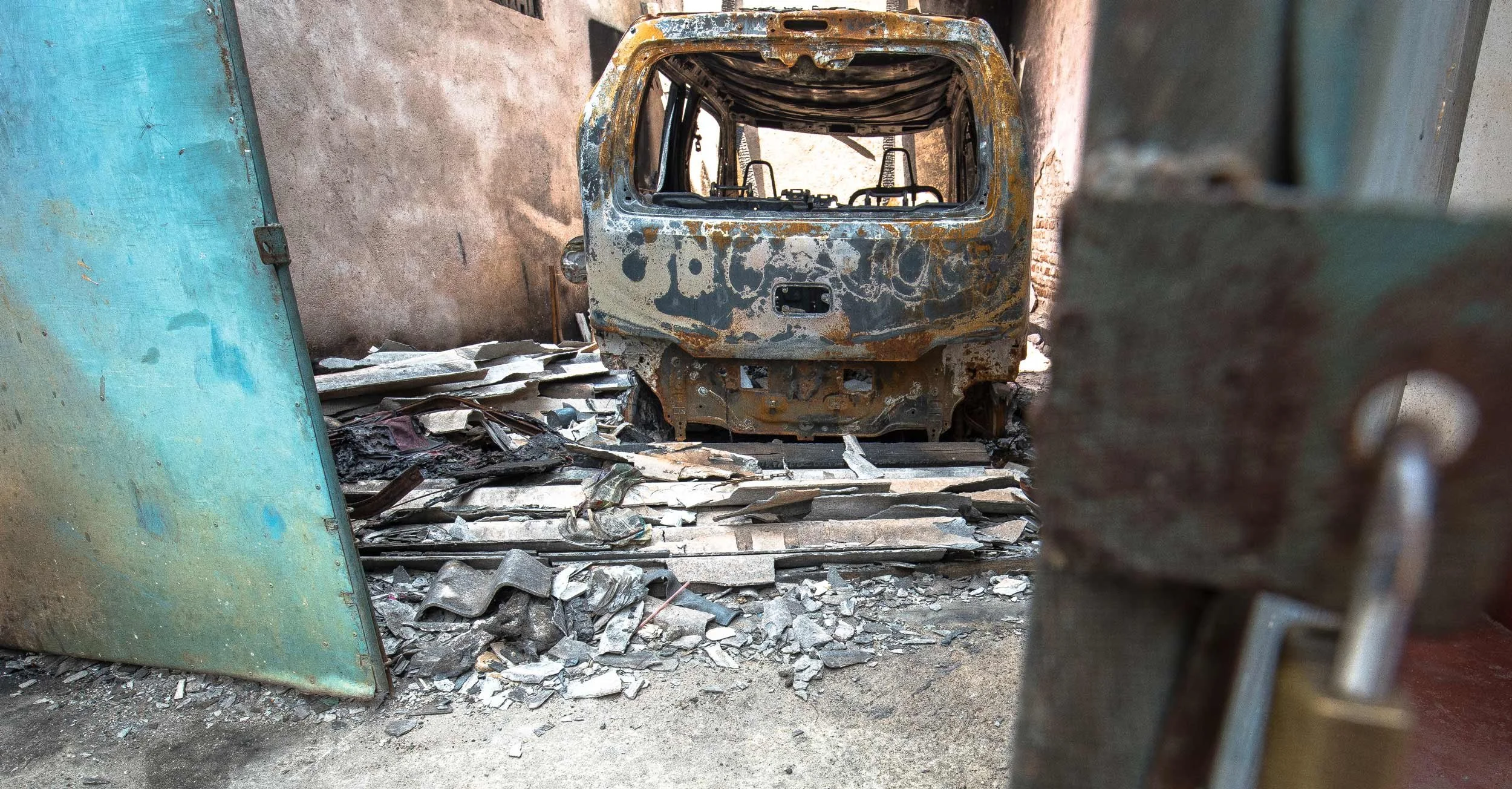
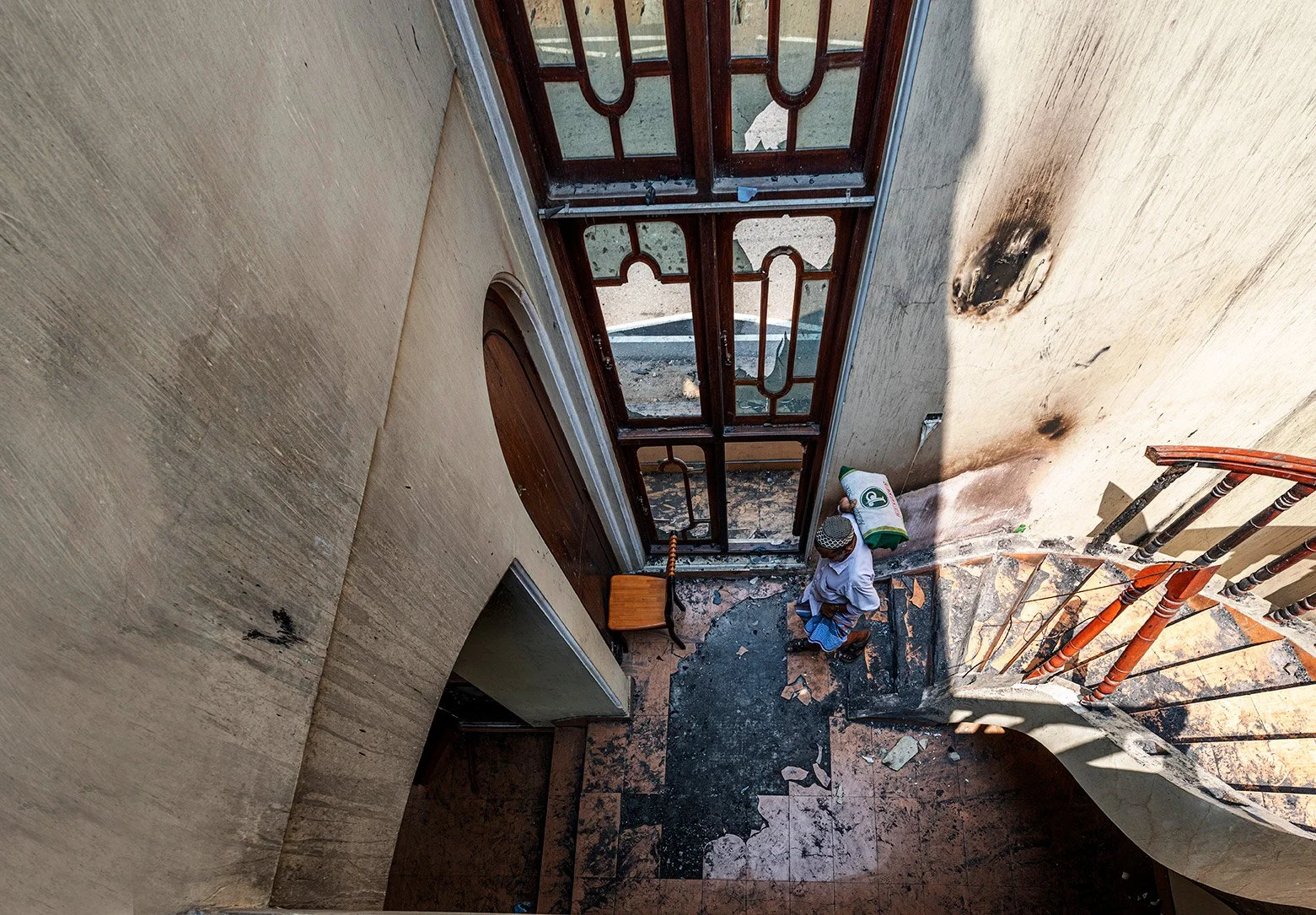
This story looks at the aftermath rather than the spectacle of violence. A prayer cap lies among burnt remains. A stairwell carries smoke on its walls. Inside a mosque, the carpet is lifted and reset, as if the room itself is trying to breathe again.
These photographs hold the quiet labour that follows communal violence: cleaning, returning, repairing, and praying in places where safety had been broken.
Digana/Teldeniya in March 2018
Anti-Muslim violence initially erupted in Digana. Subsequently, it spread to other areas in the Kandy district, such as Teldeniya, Pallekalle, Katugastota, and Akurana.In March 2018, mob violence occurred in several areas along an east-to-west arc, located 5 to 20 kilometers north of Kandy, including Hatharaliyadda and Tumpane. The violence began in Medadumbara, spread to Kundasale on the second day, and then to Patha Dumbara on the following day. By the fourth day, it had reached Pujapitiya, Harispattuwa, Akurana, and Yatinuwara.The violence resulted in at least two deaths, property damage to numerous Muslim-owned homes, shops, and businesses, including house burning and shop looting, and attacks on several mosques. Many families were displaced, seeking safer areas, with 17 mosques, 289 houses, 217 businesses, and 82 vehicles destroyed.
Make it stand out.
-
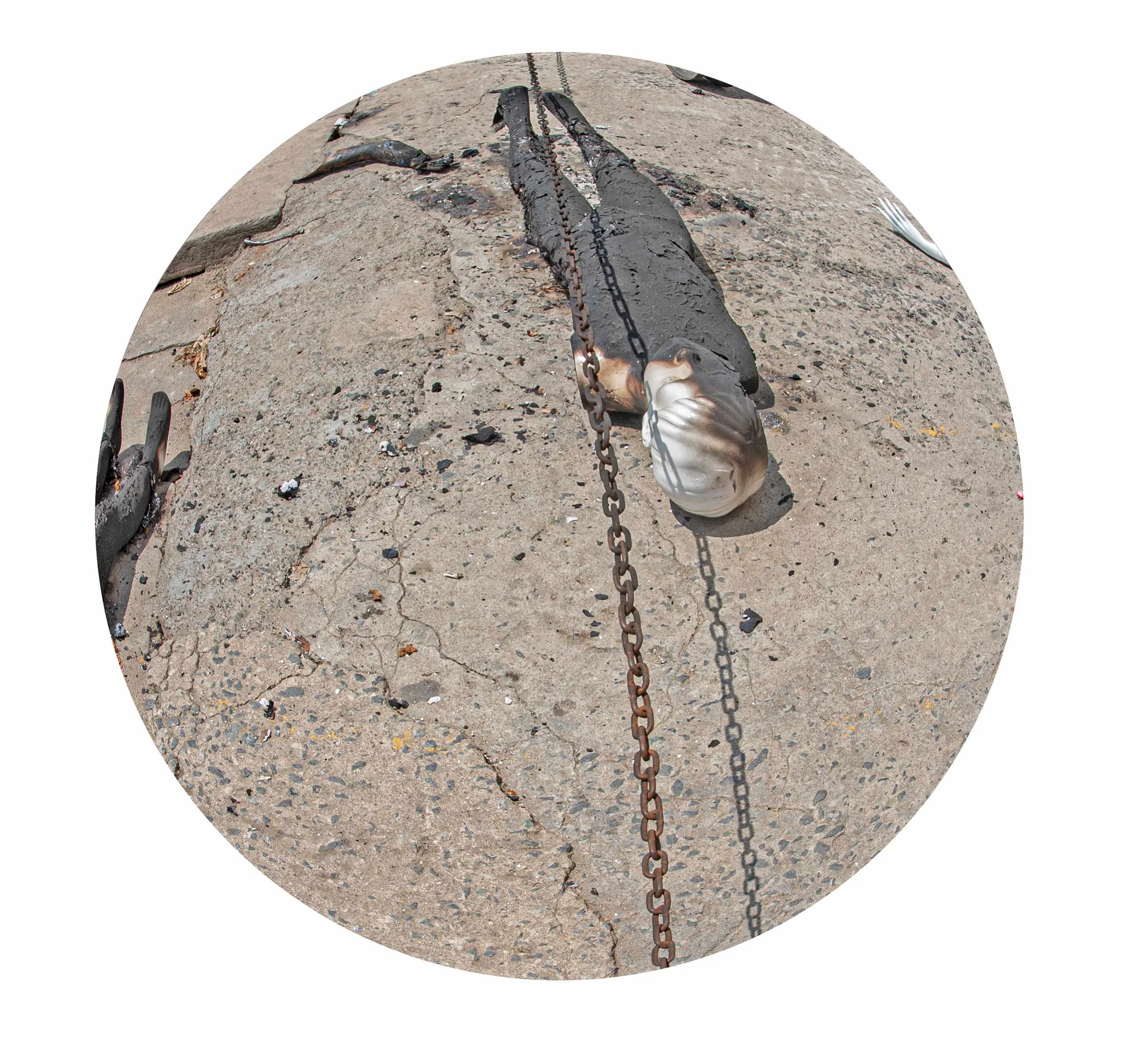
![Among the burnt remains of property destroyed during anti-Muslim violence in Sri Lanka.]()
What remained
Among the burnt remains of property destroyed during anti-Muslim violence in Sri Lanka.
-
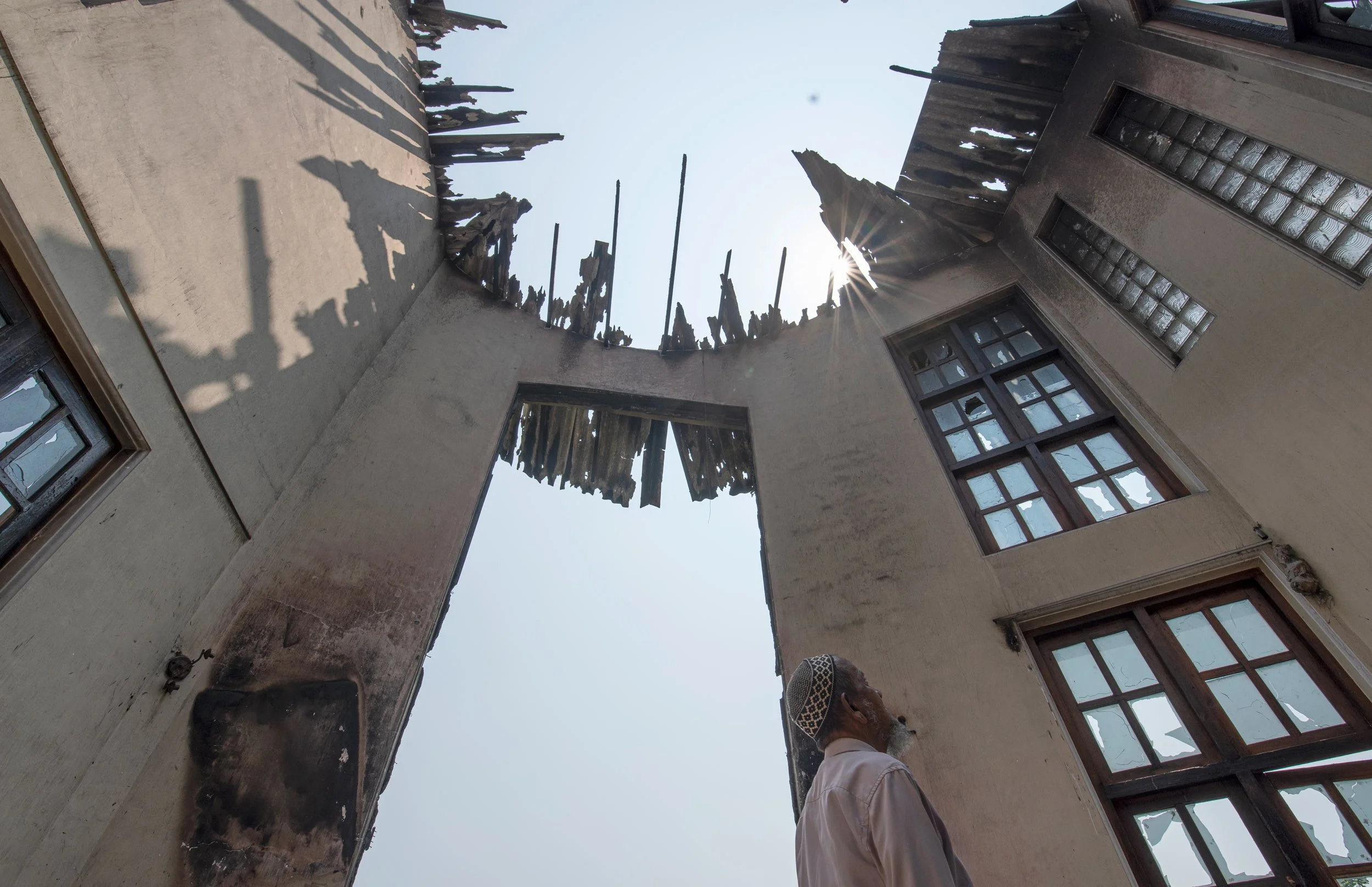
![A man passes through a damaged building where fire has left its mark on the walls and floor.]()
Smoke on the walls
A man passes through a damaged building where fire has left its mark on the walls and floor.
-
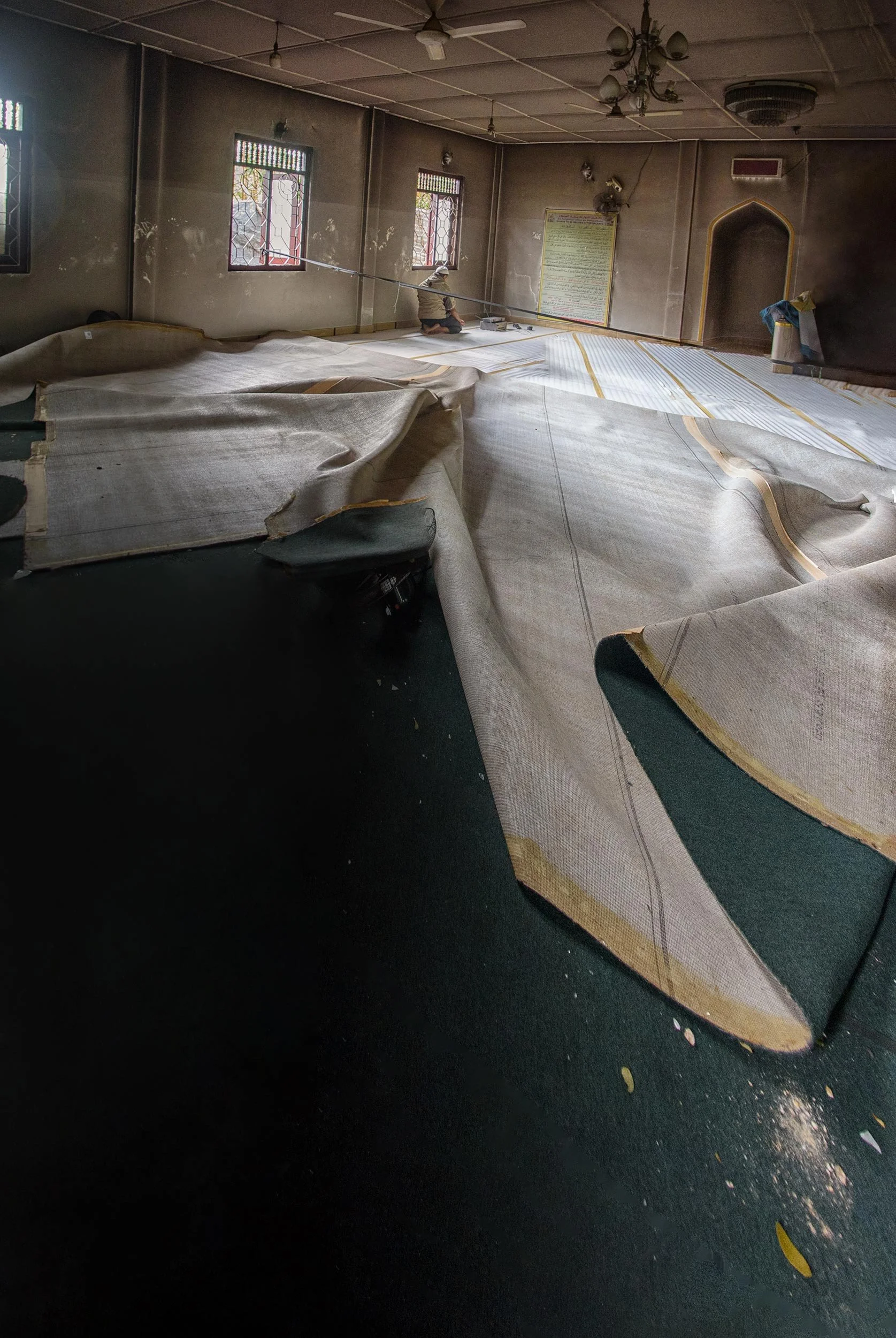
![inside a damaged mosque, the carpet is lifted and reset as the space is slowly made usable again. The Noor Jummah Mosque in Digana was among the religious sites affected during the March 2018 violence in the Kandy District. The mosque and surroundin]()
The room returns to prayer
inside a damaged mosque, the carpet is lifted and reset as the space is slowly made usable again.
The Noor Jummah Mosque in Digana was among the religious sites affected during the March 2018 violence in the Kandy District. The mosque and surrounding Muslim properties were attacked and damaged, becoming part of a wider wave of communal unrest that spread across Digana and nearby Teldeniya.
-
![]()
New List Item
Description goes here -
![]()
New List Item
Description goes here -
![]()
New List Item
Description goes here -
![]()
New List Item
Description goes here -
![]()
New List Item
Description goes here -
![]()
New List Item
Description goes here -
![]()
New List Item
Description goes here -
![]()
New List Item
Description goes here